
Resources
Campaigns

National Minority Health Month
Observed annually in April, National Minority Health Month is a time to raise awareness of the importance of improving health outcomes for all communities, especially those most affected by disparate health outcomes. This observance aims to improve health outcomes across the United States by promoting health education and dismantling systemic barriers to quality care. Help us ensure everyone has access to the high-quality, respectful care they deserve.
Learn more about this campaignBlog

Working In vs. Working For a Community: Why the Difference Matters
Working in a community means you are part of it. You build relationships, share spaces, and take part in daily life. This approach is about working together. It requires listening, being humble, and learning from those who are most affected. Instead of bringing in ready-made solutions, you create them together. Trust matters, and everyone is responsible. In…
Read this blog postCourses
Downloadable Content
NICHQ Respectful Maternity Care Toolkit Dissemination Kit
This toolkit supports clinicians, clinical teams and healthcare leaders in integrating respectful, patient-centered practices into maternity care across the childbirth journey.
Download this resourceDownloadable Content
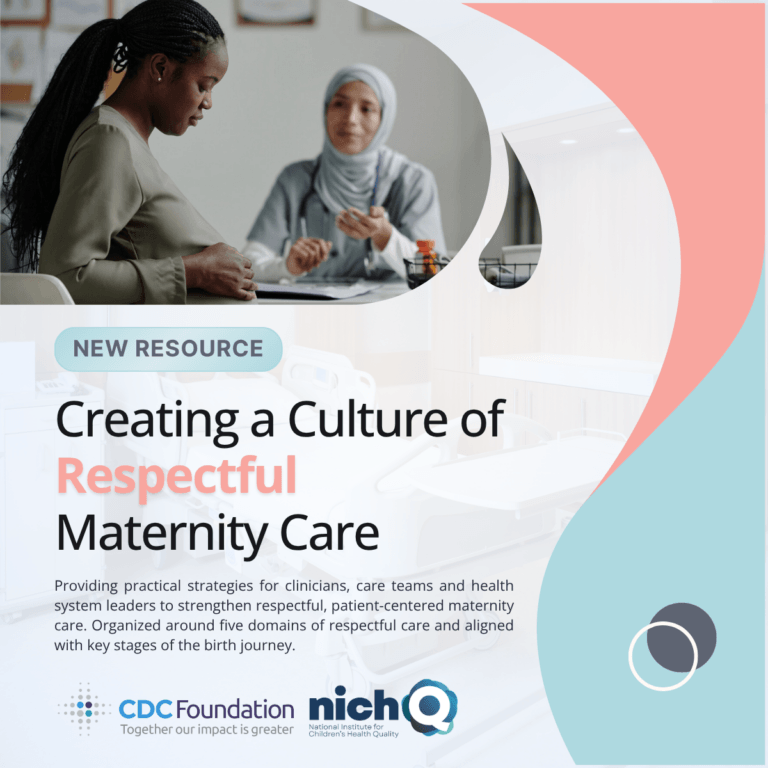
NICHQ Respectful Maternity Care Toolkit Social Media Graphics
A collection of social media graphics to help expand awareness of respectful maternity care practices.
Download this resourcePublications
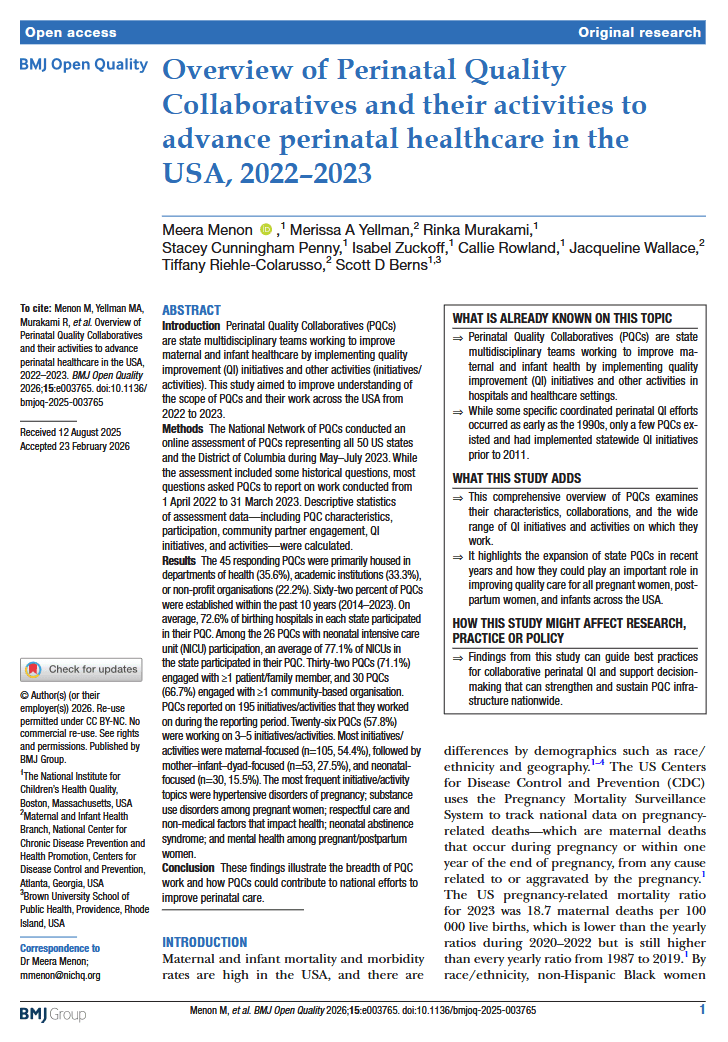
Overview of Perinatal Quality Collaboratives and their activities to advance perinatal healthcare in the USA, 2022–2023
This study aimed to improve understanding of the scope of PQCs and their work across the USA from 2022 to 2023.
Access this publicationBlog
NICHQxAMCHP: Reflections from AMCHP 2026
Several National Institute for Children’s Health Quality (NICHQ) staff members attended this year’s Association of Maternal & Child Health Programs (AMCHP) Annual Conference from March 7-10, 2026, in Washington, DC. This year’s theme, “The Power of Connection,” emphasized a key tenet of our work: relationships, partnerships, and shared purposes are essential to improving maternal and child health outcomes.
Read this blog postWebinars
Creating a Culture of Respectful Maternity Care (RMC)
This webinar introduces the NICHQ Respectful Maternity Care Toolkit, designed to support individual clinicians, teams, and leadership in promoting patient-centered care
Watch this webinarDownloadable Content
Resources to Create a Culture of Respectful Maternity Care
Respectful maternity care honors the dignity, autonomy, personhood and individual preferences of women giving birth. This toolkit provides strategies and tools to improve teamwork, communication, and safety culture in perinatal units.
Download this resourceCampaigns

Rare Disease Day
Rare Disease Day More Than You Can Imagine February 28 is Rare Disease Day. Despite being considered ‘uncommon,’ there are more than 6,000 rare diseases that impact hundreds of millions of people globally. Almost three-quarters of genetic rare diseases develop during childhood. Join NICHQ in raising awareness about rare diseases to help improve the lives…
Learn more about this campaign