National Breastfeeding Awareness Month

Support breastfeeding mothers and pregnant patients

This August, we join the U.S. Breastfeeding Committee in recognizing National Breastfeeding Month. Help us spread the word about the benefits of breastfeeding or chestfeeding, and learn how you can support mothers and pregnant patients!

Young mother breastfeeding baby while playing with toddler.

CLOSING THE GAP

Ensuring ALL Families Have the Opportunity to Breastfeed
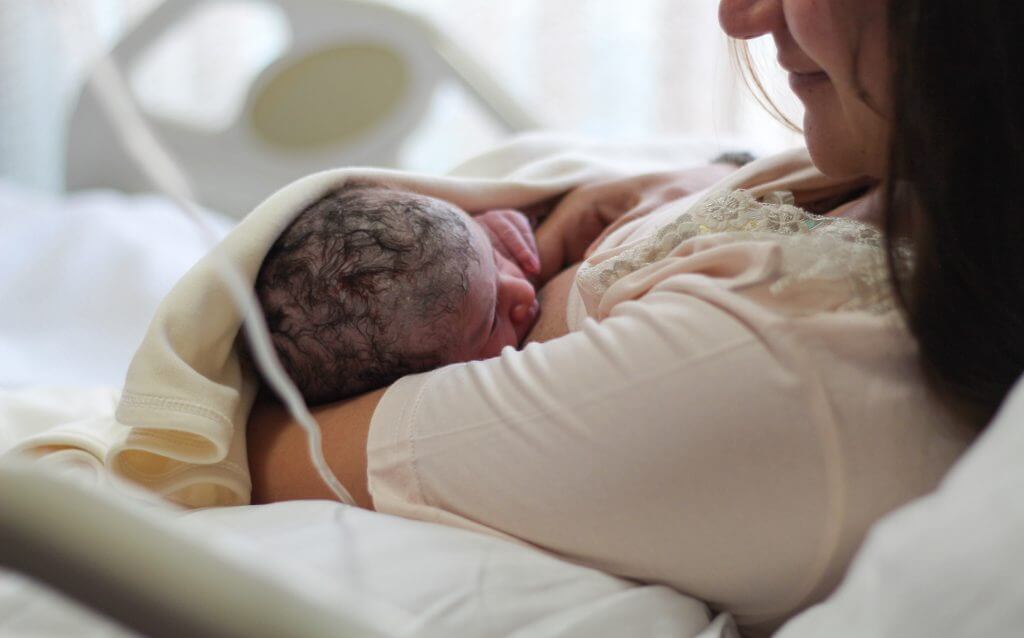
Rates of breastfeeding in the U.S. vary widely because of the multiple and complex barriers new parents face when starting and continuing to breastfeed. The American Academy of Pediatrics (AAP) recommends that infants be exclusively breastfed or chestfed for about the first 6 months with continued feeding while introducing appropriate complementary foods for one year or longer. Yet, many mothers and pregnant patients struggle to reach their breastfeeding goals, and sixty percent do not breastfeed as long as they intended to.

The AAP updated its Breastfeeding Policy Statement to call for more human milk feeding support – particularly for Black mothers and pregnant patients. They urge that implicit bias, structural bias, and systemic discrimination must be addressed in order to improve existing disparities in human milk feeding.

NICHQ INitiatives

Our Breastfeeding and Safe Sleep Work

The use of a fair and impartial lens is imperative in the work of making breastfeeding and chestfeeding a national norm. We’re grateful to have insight from a representative team of experts and people with lived experience from different backgrounds on these project-related breastfeeding and safe sleep initiatives.


National Action Partnership to Promote Safe Sleep Improvement and Innovation Network (NAPPSS-IIN)

NAPPSS-IIN is an initiative to make infant safe sleep and breastfeeding the national norm by aligning stakeholders to test safety bundles in multiple care settings to improve the likelihood that infant caregivers and families receive consistent, evidence-based instruction about safe sleep and breastfeeding.

Learn more about this project

Supporting Healthy Start Performance Project

Healthy Start is a community-based federal program seeking to eliminate disparities in infant mortality and perinatal outcomes by working to improve systems of community care in communities with infant mortality rates at least 1.5 times the U.S. national average.

Learn more about this project

National Network of Perinatal Quality Collaboratives

NICHQ works to enhance the coordination and communication of perinatal quality collaboratives across the nation, with the ultimate goal of improving health outcomes for mothers and newborns.

Learn more about this project

Maternal Health Action & Resource Center (MHARC)

The newly established MHARC will provide capacity building assistance (CBA), training, and technical assistance (TTA) to State Maternal Health Innovation awardees and other Health Resources and Services Administration (HRSA) – Maternal and Child Health Bureau award recipients. This center will broadly share and disseminate information about evidence-based strategies and guidance with the purpose of enhancing and strengthening recipients’ ability to improve maternal health outcomes for all populations in their communities in order to advance maternal health nationally.

Learn more about this project

Community-Centered Hospital Initiative (CCHI)

The Community-Centered Hospital Initiative (CCHI) centers communities to uplift their capacity as leaders in improving perinatal and infant health by recognizing their expertise and building on their existing practices and processes.

Learn more about this project
LEARN WITH NICHQ

Tools to Improve your Practice

Improving Our Approach

This webinar provides approaches and strategies health professionals can use to help mothers open up about the challenges they face when breastfeeding. By understanding those challenges, we can better provide the supports they need.
Watch now

Community infant safe sleep and breastfeeding promotion and population level-outcomes: A mixed methods study

Study on community-level strategies and state-level outcomes for infant safe sleep & breastfeeding.
See more

Centering Community Voices

A webinar on how NAPPSS-IIN shifts to community-driven QI for safe sleep and breastfeeding.
Watch now

Maternity Care Clinicians' Experiences Promoting Infant Safe Sleep and Breastfeeding During the COVID-19 Pandemic

Explore clinicians’ perceptions & experiences promoting safe sleep & breastfeeding during COVID-19.

See more

Publications

Community-based approaches to infant safe sleep and breastfeeding promotion: a qualitative study

In the U.S., sudden unexpected infant deaths (SUID) due to accidental suffocation and strangulation in bed (ASSB) are increasing, with disparities by race/ethnicity. While breastfeeding is a protective factor against infant mortality, racial/ethnic disparities are present in its uptake, and motivations to breastfeed are also often coupled with non-recommended infant sleep practices that are associated with infant sleep deaths. Combining infant safe sleep (ISS) and breastfeeding promotion on the community level presents opportunities to address racial/ethnic disparities and associated socioeconomic, cultural, and psychosocial influences.

Conclusions

Our findings support embedding risk-mitigation approaches in ISS education; relationship building between providers, clients, and peers; and the provision of ISS and breastfeeding supportive material resources with educational opportunities. These findings may be used to inform community-level provider approaches to ISS and breastfeeding promotion.

Community-based approaches to infant safe sleep and breastfeeding promotion: a qualitative study

Save the Date

Weekly Observances

Five distinct weeks are celebrated during Breastfeeding Awareness Month.

  • August 1-7: National WIC Breastfeeding Week
  • August 8-14: Indigenous Milk Medicine Week
  • August 15-21: Asian American Native Hawaiian and Pacific Islander Breastfeeding Week
  • August 25-31: Black Breastfeeding Week
  • September 8-14: Semana de la Lactancia Latina

NICHQ Insights

Reading List for National Breastfeeding Awareness Month

At NICHQ, we are committed to making breastfeeding and infant safe sleep the national norm. Check out our insights to learn how you can support this initiative.

View all insights

A Better Approach to Conversations about Breastfeeding

I’m worried my baby is not getting enough milk.       I need to go back to work soon, and I can’t breastfeed or pump when I’m working.       My baby prefers the bottle or does not want to breastfeed.       According to a recent NICHQ survey, these are some…

Read more

Bedsharing, Breastfeeding and Babies Dying: A Conversation Worth Having

Bedsharing can lead to longer breastfeeding duration. It also leads to more infant deaths. These opposing facts represent a major dilemma for those working to improve infant health. It becomes even trickier when we dive a little deeper. Breastfeeding also correlates with lower sudden infant death syndrome (SIDS) rates, the most common cause of post-neonatal…

Read more

Better Sleep for Breastfeeding Mothers, Safer Sleep for Babies

When someone breastfeeds, they release oxytocin, a hormone that soothes anxieties and helps induce a unique emotional connection to their newborn baby. Oxytocin, also known as “the love hormone,” packs a powerful punch that, while supporting healthy breastfeeding, has one potentially dangerous side-effect: it can make people tired.   “New mothers are sleep-deprived and understandably stressed,” says…

Read more

Bringing Breastfeeding Support to More Mothers and Caregivers

No mother should feel alone on her breastfeeding journey. But for new mothers and caregivers, who are often operating on limited sleep and balancing the needs of their newborn with the demands of their home and work life, breastfeeding can be an overwhelming and sometimes isolating experience. That’s what makes breastfeeding support, especially during those…

Read more

Closing the Breastfeeding Disparity Gap: Methods for Improvement

Hispanic women face a unique set of challenges when it comes to breastfeeding, including overcoming longstanding cultural beliefs, such as views on healthy baby weight, and dealing with language barriers. When compared to all other ethnic groups, Hispanic mothers are most likely to supplement breastmilk with formula within the first two days of life. One hospital…

Read more

Continuing Conversations Around Breastfeeding and Safe Sleep Promotion

  In the U.S., significant racial/ethnic and geographic disparities exist among sudden unexpected infant deaths (SUID) and breastfeeding practices. Combining infant safe sleep (ISS) and breastfeeding promotion on the community level presents opportunities to address these racial/ethnic disparities and associated socioeconomic, cultural, and psychosocial influences.  Join NICHQ for an upcoming webinar, “Their stories are so…

Read more

Cultural Sensitivity for Better Breastfeeding Outcomes

My baby always seems hungry, so I must not be producing enough milk. A fat baby is a healthy baby. My milk doesn’t look right; I’ve heard it can be dirty for the first couple of days. A decision regarding whether or not to breastfeed or chestfeed almost always comes from a place of concern…

Read more

NICHQ News

Stay in the Loop

Get information on observances like Breastfeeding Awareness Month and other NICHQ news delivered directly to your inbox.

Spread the Word

USBC Forward Together

The U.S. Breastfeeding Committee announced that the 2025 National Breastfeeding Month (NBM) theme is Forward Together. This year’s theme centers unity, solidarity, and hope, and celebrates the strength and determination of the organizations and advocates committed to advancing policy, systems, and environmental change to improve access to human milk.

USBC Forward Together Campaign

Support breastfeeding mothers and pregnant patients
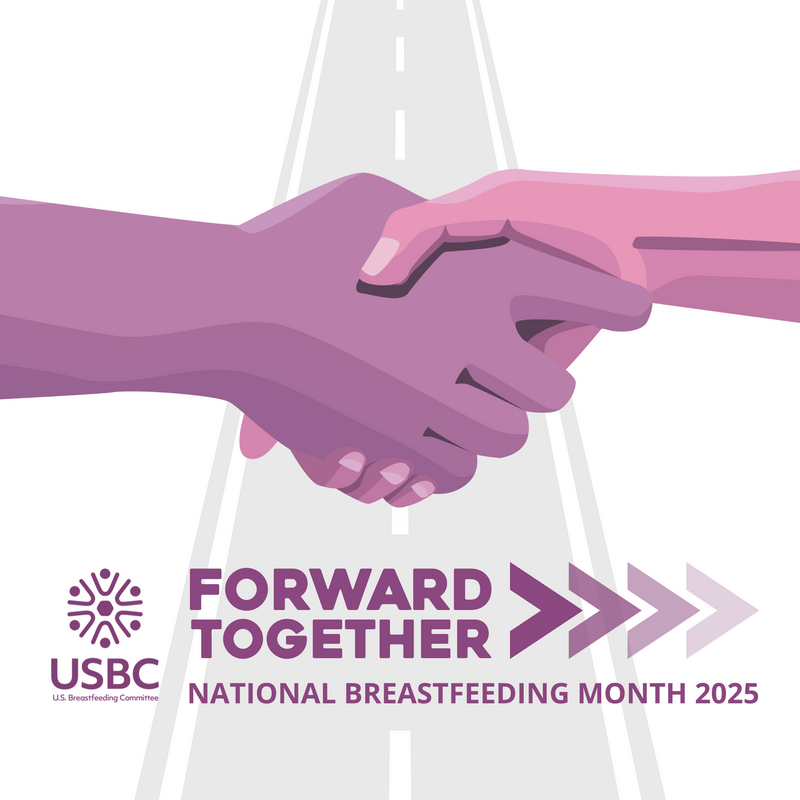
Forward Together USBC 2025 National Breastfeeding Awareness Month

Additional Articles & Resources

State Perinatal Quality Collaboratives

List of PQCs funded by the Center for Disease Control and Prevention (CDC)

Visit the Site

The Power of PQCs

Video showing the impact that PQCs have on the communities they serve. Produced by the NNPQC.

Watch the Video

PQCs in the News

Articles in news outlets covering state PQCs, their activities, and the people that work in the collaboratives.

Visit the Site

Patient Safety Bundles

From the Alliance for Innovation on Maternal Health. PSBs are collections of evidence-informed best practices that address clinically specific conditions in pregnant and postpartum people. The NNPQC helps provide TA and support to PQCs in adopting the core AIM Perinatal Mental Health Bundle.

Visit the Site

Perinatal Quality Collaboratives

The CDC’s landing page for PQCs, including helpful infographics, videos, and links to help explain what PQCs are, how they work, and stories, learnings, and publications that have come out of the state PQCs.

Watch the Video